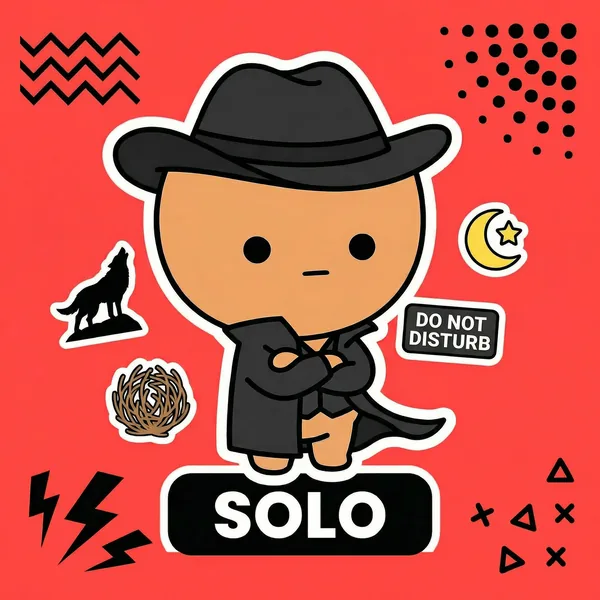
The Loner (SOLO) SBTI Personality Type: Master of Selective Engagement
SOLO individuals are not antisocial but highly selective, possessing a rich inner world where true life unfolds after social obligations conclude.
What Is the Loner (SOLO) Personality Type?
The SOLO personality type, aptly nicknamed "The Loner," is often misunderstood. It's not about a disdain for humanity or a desire to be perpetually alone; rather, it's a profound preference for depth over breadth in social interactions and a rich, vibrant inner world that requires little external validation. The tagline, "I'm good, thanks. (Please leave.)," perfectly encapsulates their approach: they value their solitude and carefully guard their energy, engaging only when the connection promises genuine substance. This isn't a sign of antisocial personality disorder but a deliberate choice rooted in their intrinsic nature.
SOLOs are characterized by their highly selective nature. They are not introversion in the stereotypical sense of being shy or socially awkward. Instead, their selectivity stems from a deep well of self-awareness and a clear understanding of what truly energizes and drains them. While they can navigate social situations with ease, they often find prolonged or superficial interactions to be exhausting. Their true vitality emerges when they are able to retreat into their own space, whether that's pursuing a passion, engaging in deep thought, or simply enjoying quiet contemplation.
This personality type thrives on authenticity. Small talk and surface-level pleasantries hold little appeal. They are drawn to individuals who can engage in meaningful conversations, explore complex ideas, and respect their need for personal space. This selective approach means their circle of close friends might be small, but these relationships are often incredibly strong and enduring, built on mutual understanding and respect for individual boundaries. The SOLO type demonstrates that true connection isn't about constant presence, but about profound, intentional engagement when it matters most.
Core Traits and Behavioral Patterns
The SOLO personality is defined by a unique constellation of traits that shape their interactions with the world. At their core, SOLOs exhibit a profound sense of self-sufficiency. They are comfortable in their own company and often prefer solitary activities, not out of loneliness, but because these activities allow them to fully immerse themselves in their interests without external distractions. This self-reliance is a significant strength, fostering independence and a strong locus of control.
Another prominent trait is their deep capacity for introspection. SOLOs spend a considerable amount of time reflecting on their thoughts, feelings, and experiences. This constant internal dialogue contributes to their rich inner world and their ability to understand complex concepts. They are often highly analytical, preferring to process information thoroughly before forming opinions or making decisions. This thoughtful approach can sometimes be perceived as aloofness, but it is merely a manifestation of their need for internal processing.
Behaviorally, SOLOs are often observed to be calm and composed, even in stressful situations. They are less likely to be swayed by group dynamics or external pressures, maintaining a steady demeanor. Their decision-making process is typically deliberate and well-considered, as they weigh all options and potential outcomes. They are not impulsive; rather, they are strategic in their actions, often planning several steps ahead. This meticulousness can extend to all areas of their lives, from their work to their personal projects.
Furthermore, SOLOs possess a keen observational ability. They tend to be excellent listeners and observers, absorbing details that others might miss. This allows them to gain a nuanced understanding of people and situations, even if they don't actively participate in every conversation. Their quiet presence often belies a highly active and perceptive mind. They are often drawn to pursuits that require deep focus and sustained attention, such as research, writing, or artistic endeavors, where their rich inner world can be fully expressed.
Their need for personal space and boundaries is paramount. SOLOs are adept at setting and maintaining these boundaries, which are crucial for preserving their energy and mental well-being. They understand that over-socialization can lead to burnout, and they are not afraid to decline invitations or retreat when they feel their resources are depleted. This isn't a rejection of others, but a necessary act of self-preservation, ensuring they can continue to engage meaningfully when they choose to.
Strengths of the SOLO Personality
The SOLO personality type boasts a unique set of strengths that enable them to navigate the world with remarkable effectiveness and depth. One of their most significant assets is their independence. SOLOs are inherently self-sufficient, capable of thriving without constant external validation or guidance. This independence fosters a strong sense of autonomy, allowing them to pursue their goals with unwavering focus and conviction. They are not easily swayed by popular opinion or peer pressure, making them reliable decision-makers who stand by their principles.
Their deep analytical thinking is another powerful strength. SOLOs possess an exceptional ability to delve into complex problems, dissecting them into manageable parts and identifying underlying patterns. This meticulous approach often leads to innovative solutions and a comprehensive understanding of intricate subjects. They are natural problem-solvers, often seeing connections and implications that others might overlook. This analytical prowess is often linked to high cognitive ability.
Resilience is a hallmark of the SOLO type. Because they rely heavily on their inner resources and are comfortable with solitude, they are often better equipped to handle setbacks and adversity. They possess a strong inner fortitude, allowing them to bounce back from challenges with renewed determination. This resilience is not about avoiding pain, but about processing it internally and emerging stronger, often demonstrating a robust psychological resilience.
Furthermore, SOLOs are characterized by their authenticity. They have little patience for pretense or superficiality, preferring genuine interactions and honest self-expression. This authenticity makes them trustworthy and reliable friends and colleagues, as their words and actions are consistently aligned with their true selves. They inspire confidence in others through their straightforward and unvarnished approach to life.
Finally, their capacity for intense focus and concentration allows them to achieve mastery in their chosen fields. When a SOLO is engaged in a task, they can block out distractions and dedicate themselves entirely to it, leading to high-quality output and profound insights. This deep focus is a key driver of their success in areas requiring sustained intellectual effort or creative output, often leading to a state of flow where productivity peaks.
Weaknesses and Blind Spots
Despite their many strengths, SOLOs also possess certain weaknesses and blind spots that can present challenges if not recognized and managed. One significant area is their tendency towards social isolation. While they value their solitude, an excessive retreat from social interaction can lead to feelings of loneliness or a lack of external perspective. This isn't necessarily depression, but a potential consequence of their highly selective nature, which can sometimes be perceived as aloofness or disinterest by others, making it harder to form new connections.
Another blind spot can be their difficulty with collaboration. Their strong independence and preference for working alone can sometimes make them less effective in team environments. They may struggle to delegate tasks, trust others' judgment, or adapt to group dynamics, preferring to take on all responsibilities themselves. This can lead to increased workload and potential friction with colleagues who might interpret their self-reliance as a lack of team spirit or even arrogance.
SOLOs can also be prone to overthinking and analysis paralysis. Their deep introspection, while a strength, can sometimes lead to excessive rumination, making it difficult to make quick decisions or take action. They may get caught in a loop of analyzing every possible outcome, delaying progress and potentially missing opportunities. This can be exacerbated by a fear of making mistakes, leading to perfectionism that hinders completion rather than ensuring quality.
Their guarded nature, while protecting their inner world, can also lead to missed opportunities for emotional connection. SOLOs may find it challenging to express vulnerability or share their deeper feelings, even with those they trust. This can create a barrier in relationships, preventing the kind of profound intimacy they secretly crave. This emotional reserve can sometimes be mistaken for a lack of empathy, even though SOLOs often possess a deep understanding of others' emotions.
Finally, SOLOs might struggle with adapting to unexpected social demands. When thrust into situations requiring spontaneous social engagement or prolonged interaction, they can quickly become drained and uncomfortable. This can manifest as social anxiety or simply a strong desire to escape the situation, which can be misinterpreted by others as rudeness or disinterest. Their need for recharge time is crucial, and neglecting it can lead to significant stress.
SOLO in Relationships
Relationships for a SOLO individual are a nuanced landscape, characterized by depth, loyalty, and a fierce protection of personal space. Unlike those who thrive on constant companionship, SOLOs seek quality over quantity in their connections. They are not quick to form bonds, but once a relationship is established, it is often built on a foundation of mutual respect, understanding, and a shared appreciation for authenticity.
In romantic relationships, SOLOs are devoted partners, but their need for autonomy remains paramount. They require a partner who understands and respects their need for solitude and their rich inner world. A partner who can provide space without feeling neglected, and who can engage in deep, meaningful conversations, will find a profoundly loyal and insightful companion. They are unlikely to engage in codependency, as their strong sense of self prevents them from losing themselves in another. However, their reserved nature can sometimes make it challenging for them to express affection or vulnerability, which might require patience and reassurance from their partner.
Friendships with SOLOs are often characterized by a quiet intensity. They may have a small circle of friends, but these individuals are typically chosen with great care. SOLOs value friends who are intellectually stimulating, emotionally mature, and who respect their boundaries. They are excellent listeners and offer thoughtful advice, making them trusted confidantes. While they may not initiate social gatherings frequently, they are present and engaged when they do choose to participate, offering genuine connection rather than superficial interaction.
Family dynamics can sometimes be a source of friction for SOLOs, particularly if family members do not understand or respect their need for personal space. They may struggle with expectations for constant family engagement or feel overwhelmed by overly intrusive questions. Establishing clear boundaries early on is crucial for maintaining healthy family relationships. Despite these challenges, SOLOs are deeply caring individuals who value their family, expressing their love through actions and quiet support rather than effusive displays.
For SOLOs, the key to successful relationships lies in clear communication and mutual understanding. They thrive with partners and friends who appreciate their unique blend of independence and loyalty, and who recognize that their need for solitude is not a rejection, but a vital component of their well-being. They are capable of profound connection, but it must be on their terms, respecting their internal rhythm and their inherent desire for meaningful, unforced interaction. They often seek partners with high emotional intelligence who can intuit their needs.
SOLO vs. Similar SBTI Types
While the SOLO type is distinct, it shares some superficial similarities with other SBTI personality types, leading to potential misunderstandings. It's crucial to differentiate SOLO from types that might also appear reserved or independent, as their underlying motivations and behavioral patterns can be quite different. Understanding these distinctions helps in appreciating the unique essence of the SOLO personality.
For instance, a type like the ARCHITECT might also exhibit a preference for solitary work and deep thought. However, the ARCHITECT's solitude is often driven by a desire for intellectual mastery and strategic planning, whereas the SOLO's is more about preserving personal energy and maintaining internal harmony. Similarly, the GUARDIAN might appear reserved, but their focus is on stability and tradition, often engaging in social structures to maintain order, a stark contrast to the SOLO's selective engagement.
Here's a comparison to highlight the nuances:
| Trait/Type | SOLO | ARCHITECT (ARCH) | GUARDIAN (GRDN) |
|---|---|---|---|
| Core Motivation | Preserving personal energy, internal harmony, authentic connection | Intellectual mastery, strategic planning, innovative solutions | Maintaining stability, upholding traditions, ensuring security |
| Social Approach | Highly selective, values deep connection over breadth, needs recharge time | Independent, values intellectual discourse, can be perceived as aloof due to intense focus | Reserved but socially engaged within established structures, values community and duty |
| Decision Making | Deliberate, introspective, prioritizes personal well-being | Logical, analytical, driven by efficiency and long-term vision | Practical, cautious, relies on established rules and past experiences |
| Energy Source | Solitude and internal reflection | Intellectual challenges and problem-solving | Order, routine, and contributing to the collective |
| Potential Pitfall | Social isolation, perceived aloofness | Overly critical, detached from emotional realities | Resistance to change, rigid adherence to rules |
This comparison underscores that while certain external behaviors might overlap, the internal drivers and fundamental approaches to life for each type are distinct. The SOLO's selective engagement is not a flaw but a finely tuned mechanism for maintaining their well-being and fostering genuine connections, a concept often explored in discussions around personality psychology.
Career and Work Style
The SOLO personality type approaches their career and work with the same deliberate and independent spirit that defines their personal life. They are not typically drawn to highly collaborative or overtly social work environments. Instead, they thrive in roles that allow for autonomy, deep focus, and the opportunity to produce high-quality, meaningful work.
SOLOs excel in professions that require intense concentration, analytical thinking, and independent problem-solving. Fields such as research, writing, data analysis, software development, engineering, and specialized technical roles are often a natural fit. They are capable of sustained effort on complex projects, often preferring to work behind the scenes where they can meticulously craft their contributions without constant interruption or external pressure. Their attention to detail is a significant asset in these roles.
In the workplace, SOLOs are reliable and conscientious. They take their responsibilities seriously and are committed to delivering excellent results. However, they may struggle with excessive team meetings, office politics, or roles that demand constant networking and superficial interaction. They prefer clear objectives and the freedom to determine the best approach to achieve them. Micromanagement is particularly stifling for a SOLO, as it undermines their sense of autonomy and trust.
Their communication style at work is typically direct and to the point. They value efficiency and clarity, often preferring written communication over verbal discussions for complex topics, as it allows for thoughtful consideration and precise articulation. While they may not be the most vocal members of a team, their contributions are often well-reasoned and insightful, especially when given the space to process information thoroughly. They are unlikely to engage in gossip or superficial workplace chatter.
For a SOLO to truly flourish in their career, they need an environment that respects their need for independence and quiet concentration. Companies that offer flexible work arrangements, opportunities for deep work, and value individual contributions are ideal. When their unique strengths are recognized and accommodated, SOLOs become invaluable assets, bringing a level of depth, precision, and independent thought that can drive significant innovation and success. They often find satisfaction in roles where they can apply their critical thinking skills.
How to Thrive as a SOLO Type
Thriving as a SOLO personality type involves embracing your inherent strengths while strategically navigating potential challenges. The key lies in self-awareness and intentional self-management, ensuring your need for solitude and depth enriches your life rather than isolating you.
1. Embrace and Protect Your Solitude: Recognize that your need for alone time is not a weakness but a vital source of energy and creativity. Schedule dedicated periods for solitude, treating them with the same importance as any other appointment. This allows for deep reflection, creative pursuits, and emotional recharge, preventing burnout and fostering a strong sense of well-being. Understand that this is crucial for your mental health.
2. Cultivate Meaningful Connections: While broad social circles may not be your preference, actively nurture the few deep connections you value. Be intentional about reaching out to trusted friends and family, even if it's for infrequent but profound interactions. Communicate your need for space clearly to avoid misunderstandings, and let your loved ones know that your selective engagement is a sign of respect for the quality of your relationships, not a lack of care. This can help combat feelings of loneliness.
3. Develop Strategic Social Skills: You don't need to be an extrovert, but developing effective social strategies can enhance your interactions. Practice active listening, ask open-ended questions, and find common ground to engage in conversations that feel more substantial. Learning to navigate small talk efficiently can also be a valuable skill, allowing you to move past superficiality to deeper topics or gracefully exit when your energy wanes. Consider exploring resources on social skills.
4. Set Clear Boundaries: Your ability to set and maintain personal boundaries is paramount. Clearly communicate your limits regarding social commitments, work expectations, and personal space. This protects your energy and ensures that your interactions are on your terms, preventing resentment and preserving your inner peace. Remember, saying no to an invitation is saying yes to your well-being.
5. Leverage Your Strengths in Work: Seek out career paths and work environments that align with your independent and analytical nature. Roles that offer autonomy, opportunities for deep work, and intellectual challenges will allow you to flourish. Don't shy away from advocating for flexible work arrangements or projects that play to your strengths in focused, independent contribution. Your problem-solving skills are a valuable asset.
6. Practice Self-Compassion: It's easy to feel pressure to conform to societal expectations of constant social engagement. Practice self-compassion and accept your unique wiring. Understand that your preference for solitude is a valid and powerful way of being, and that your contributions to the world are just as valuable, even if they come from a quieter, more reflective place. This fosters a healthy sense of self-esteem.
By consciously integrating these strategies, the SOLO type can harness their distinct qualities to lead a fulfilling, authentic, and deeply satisfying life, marked by profound personal growth and meaningful, albeit selective, connections.
Famous Characters Who Might Be SOLO
While it's impossible to definitively type fictional characters or historical figures, we can speculate on individuals who exhibit strong SOLO traits. These are often characters known for their independence, deep inner lives, selective social engagement, and profound impact achieved through focused, often solitary, effort.
-
Sherlock Holmes (Literature): The quintessential detective, Holmes is brilliant, analytical, and highly independent. He often prefers his own company, tolerates Dr. Watson more than he seeks him out, and his social interactions are primarily transactional, serving his intellectual pursuits. His mind is his rich inner world, and he retreats there to solve complex cases, often finding social pleasantries a distraction. His intense focus and occasional disdain for superficiality align well with SOLO characteristics.
-
Neo (The Matrix): Neo is initially a solitary hacker, disconnected from the superficial reality around him. He is chosen for his unique ability to perceive beyond the ordinary, and his journey is largely an internal one of self-discovery and mastering his abilities. While he eventually leads a rebellion, his power stems from his individual connection to the Matrix and his ability to operate independently within it. His quiet demeanor and profound internal struggle resonate with the SOLO type.
-
Rosa Parks (Historical Figure): Known for her quiet defiance, Rosa Parks was not an outspoken activist in the traditional sense, but her singular act of resistance had a monumental impact. Her strength came from a deep conviction and an inner resolve, rather than a need for public acclaim. Her ability to stand firm in her beliefs, even in isolation, and her quiet yet powerful presence suggest a strong SOLO inclination. Her actions demonstrated immense courage and conviction.
-
J.D. Salinger (Author): The reclusive author of The Catcher in the Rye, Salinger famously withdrew from public life after achieving immense success. His preference for privacy and his dedication to his craft, far from the public eye, exemplify the SOLO's need for a rich inner world and selective engagement. He prioritized his creative output and personal peace over fame and social demands, a classic SOLO move.
-
Batman/Bruce Wayne (Comics/Film): While he operates with allies, Batman's core identity and mission are deeply solitary. Bruce Wayne retreats into his persona, driven by an internal code and a profound sense of justice. He is a master strategist and detective, often working alone, and his social interactions as Bruce Wayne are often a facade. His intense focus, self-reliance, and the burden he carries alone are strong indicators of a SOLO personality, even if he struggles with trauma from his past.
These figures, whether real or fictional, demonstrate how the SOLO's unique blend of independence, introspection, and selective engagement can lead to extraordinary achievements and a profound impact on the world, often from a place of quiet strength.
Frequently Asked Questions
Q: Is the SOLO personality type the same as being antisocial?
A: No, absolutely not. While SOLOs are highly selective about their social interactions and value solitude, this is distinct from being antisocial. Antisocial personality disorder involves a disregard for the rights of others and a lack of empathy, which are not characteristics of the SOLO type. SOLOs are capable of deep connection and care deeply about those in their inner circle; they simply have a lower tolerance for superficial social engagement and a greater need for personal space.
Q: Do SOLOs get lonely?
A: Like all humans, SOLOs can experience loneliness. However, their experience of loneliness is often different. They are comfortable with solitude and may not feel lonely in the absence of constant social interaction. Loneliness for a SOLO might arise when they desire a deep, meaningful connection but are unable to find it, or when their need for space is misunderstood by others, leading to a feeling of being disconnected. It's about the quality of connection, not the quantity.
Q: Are SOLOs always introverts?
A: While there is a significant overlap, not all SOLOs are textbook introverts, and not all introverts are SOLOs. Introversion, as defined in psychology, refers to gaining energy from alone time and being drained by social interaction. SOLOs certainly fit this description. However, the SOLO type emphasizes a selective engagement and a rich inner world that goes beyond mere energy management, focusing on authenticity and depth in all aspects of life. They are more about intentionality than just energy conservation.
Q: How can I best support a SOLO friend or partner?
A: The best way to support a SOLO is to respect their need for space and their boundaries. Understand that their quietness or occasional withdrawal is not a personal slight but a necessary part of their well-being. Offer opportunities for deep, meaningful conversations rather than superficial small talk. Be patient, reliable, and authentic. When they do engage, give them your full attention, and appreciate the depth they bring to your relationship. Avoid pressuring them into social situations they clearly don't enjoy.
Q: What careers are best suited for a SOLO?
A: SOLOs thrive in careers that offer autonomy, opportunities for deep focus, and intellectual challenges. Roles in research, writing, data analysis, software development, engineering, and specialized technical fields are often excellent fits. They excel in environments where they can work independently, meticulously craft their contributions, and apply their analytical skills without constant interruption. Any role that values thoughtful, independent work over constant collaboration or networking can be a good match for a SOLO.
References
- Antisocial personality disorder
- Extraversion and introversion
- Locus of control
- Cognition
- Psychological resilience
- Flow (psychology)
- Depression (mood)
- Arrogance
- Perfectionism (psychology)
- Empathy
- Social anxiety
- Codependency
- Boundaries
- Emotional intelligence
- Personality psychology
- Attention
- Gossip
- Critical thinking
- Burnout
- Mental health
- Loneliness
- Social skills
- Problem-solving
- Self-compassion
- Self-esteem
- Courage
- Psychological trauma

The Goofball (HHHH) SBTI Personality Type: Embracing the Wonderfully Weird
Discover the HHHH "Goofball" SBTI personality type, a certificate of genuine originality for those too wonderfully weird to categorize.

The Mom Friend (MUM) SBTI Personality Type: The Unsung Healer
The MUM personality type embodies unparalleled emotional intuition and a profound drive to nurture, often at the cost of their own well-being, making them the silent anchors in any social circle.
BOSS (BOSS) SBTI Personality Type: The Natural Leader Who Takes the Wheel
Discover the BOSS SBTI personality type, the natural leader who takes charge, drives action, and commands respect with unshakeable confidence.