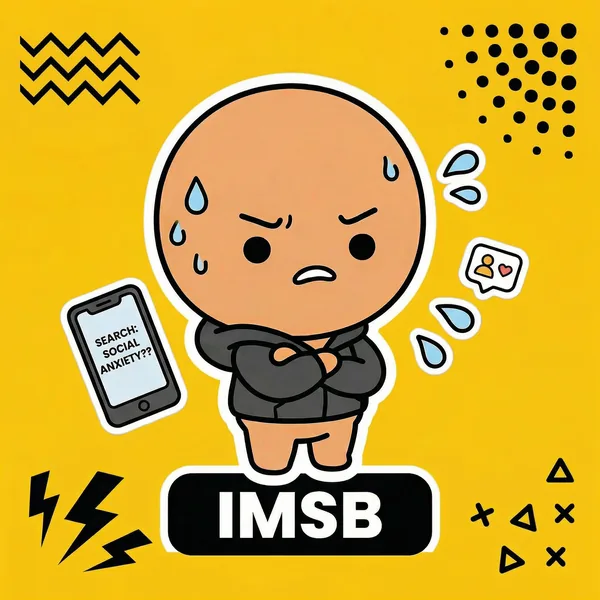
The Self-Roaster (IMSB) SBTI Personality Type: Mastering the Art of Self-Deprecating Brilliance
"I'm so bad at this. (I know.)" This simple phrase is the unofficial motto of the IMSB personality type, also known as The Self-Roaster. It perfectly captures their unique approach to life: a blend of sharp wit, deep introspection, and a relentless drive for self-improvement, all wrapped in a cloak of self-deprecating humor. Before anyone else has a chance to criticize them, the IMSB has already beaten them to the punch, delivering a well-crafted, often hilarious, critique of their own performance. This isn't just a defense mechanism; it's a fundamental part of who they are. It reveals a person who is genuinely trying their best, while simultaneously grappling with a profound fear that their best might not be good enough. This internal conflict is the engine that drives the IMSB, making them one of the most complex and fascinating of the all 27 SBTI types.
What Is the The Self-Roaster (IMSB) Personality Type?
The IMSB personality type is defined by a fascinating paradox. On one hand, they possess a high degree of conscientiousness, a trait from the Big Five personality traits model associated with diligence, discipline, and a desire for achievement. On the other hand, they have a deep-seated need for internal validation that is often masked by a humorous, self-effacing exterior. They are the artists who point out the flaws in their own masterpiece, the entrepreneurs who joke about their company's impending doom, and the friends who downplay their own significant accomplishments. This behavior is not born from a lack of confidence, but from a place of profound self-awareness and a genuine desire to improve. Their tagline, "I'm so bad at this. (I know.)", is a strategic tool that allows them to control the narrative, manage expectations, and protect their vulnerability. This tendency often overlaps with psychological perfectionism, where the relentless pursuit of flawlessness leads to intense self-scrutiny and a chronic undervaluing of their own successes. They are constantly engaged in a form of social comparison, not to compete with others, but to measure themselves against an idealized version of themselves.
Core Traits and Behavioral Patterns
The IMSB's personality is a tapestry woven from several core traits and behavioral patterns. Their signature move is preemptive self-criticism. They have an uncanny ability to anticipate potential critiques and voice them first, often with a disarming wit. This serves as both a shield and a statement of their commitment to high standards. This is fueled by their deep introspection and self-awareness. IMSBs spend a great deal of time analyzing their own thoughts, feelings, and motivations, which gives them a rich understanding of their inner world but can also lead to overthinking and analysis paralysis. They hold themselves to incredibly high standards, which is a double-edged sword. It drives their success but also fuels their fear of failure and can make it difficult to enjoy their achievements. To cope with this internal pressure, they rely heavily on humor. Self-deprecating jokes are their currency in social interactions, allowing them to connect with others while maintaining a safe emotional distance. It's a key component of their emotional intelligence. Despite their self-effacing comments, IMSBs are defined by their genuine effort. They are not slackers; their self-criticism is a direct result of their intense dedication. Underlying all of this is a profound fear of not being enough. This can manifest as imposter syndrome, a persistent feeling of being a fraud, despite clear evidence of their competence and success. This fear can be a powerful motivator, but it can also be a source of significant anxiety.
Strengths of the IMSB Personality
The IMSB's unique combination of traits gives rise to a number of compelling strengths. Their willingness to openly acknowledge their perceived flaws makes them incredibly authentic and relatable. In a world where many people try to project an image of perfection, the IMSB's honesty is a breath of fresh air. This authenticity fosters deep and meaningful connections with others. Their self-critical nature also fuels a drive for continuous improvement. They are lifelong learners, always seeking to refine their skills, expand their knowledge, and overcome their weaknesses. This commitment to growth often leads to a high level of expertise in their chosen fields. Their humor and charm are undeniable assets. Their witty, self-deprecating remarks can lighten the mood in any situation, build rapport, and make them highly effective communicators. They are often the life of the party, even if they are simultaneously analyzing their own social performance. Furthermore, their ability to confront their shortcomings, even humorously, contributes to their remarkable resilience. They are not easily defeated by setbacks. Instead, they use them as learning opportunities, bouncing back with a renewed sense of purpose and a fresh batch of self-deprecating jokes. Finally, their high standards and desire for mastery result in a strong work ethic. When an IMSB commits to a task, they do so with a level of dedication and meticulousness that is truly impressive.
Weaknesses and Blind Spots
However, the very traits that make IMSBs so compelling can also be their greatest weaknesses. Their over-reliance on self-deprecation, while often charming, can backfire. It can be misinterpreted as a genuine lack of confidence, or worse, as a manipulative tactic to fish for compliments. This can undermine their credibility and prevent others from taking them as seriously as they deserve. The constant self-scrutiny and impossibly high standards can lead to significant internal pressure and stress. This can create a chronic state of cognitive dissonance between their achievements and their self-perception, and in severe cases, can lead to burnout or even depression. IMSBs also have difficulty accepting compliments. They often deflect praise with a self-deprecating joke, finding it hard to internalize positive feedback. This can be a significant barrier to building healthy self-esteem. Their fear of judgment, even when they are the ones doing the judging, can lead to a risk of social anxiety. They may avoid situations where they feel exposed or evaluated, limiting their personal and professional opportunities. Finally, the intense pressure to perform perfectly can lead to procrastination. The fear of not meeting their own impossibly high standards can be so paralyzing that they avoid starting a task altogether. Visions of a perfect outcome can be so daunting that they lead to a complete halt in productivity. This is not laziness, but a protective mechanism against the perceived devastation of failure. It is a manifestation of their deep-seated anxiety and a direct consequence of their relentless perfectionism. They may also struggle with confirmation bias, seeking out evidence that confirms their negative self-perception while dismissing information to the contrary. This can create a self-perpetuating cycle of self-doubt and missed opportunities. The constant activation of the body's stress response system can lead to elevated levels of cortisol, the primary stress hormone, which can have long-term health consequences. Understanding the interplay of these psychological factors is crucial for IMSBs to develop effective coping strategies. They may also find themselves in situations of gaslighting, where their self-doubt is exploited by others, further eroding their sense of reality and self-worth. This is why developing a strong internal locus of control is so important for this personality type. It helps them to recognize that they are the authors of their own lives, and that their worth is not determined by the opinions of others. The journey for an IMSB is one of learning to balance their incredible drive with a sense of self-acceptance, and to use their humor not just as a shield, but as a bridge to genuine connection. It is a journey of learning to say, "I'm so bad at this, and that's okay. I'm learning." This shift in perspective can be transformative, allowing them to unlock their full potential and to find a sense of peace amidst the chaos of their own brilliant minds. The release of dopamine associated with achieving a goal can be a powerful motivator, but for IMSBs, this is often short-lived, as their inner critic quickly moves the goalposts. This is why focusing on the process, rather than the outcome, is so crucial. It allows them to find joy in the journey, rather than constantly chasing an ever-receding finish line. They may also be prone to experiencing psychological trauma more acutely, as their tendency to internalize and over-analyze events can amplify their impact. This is why seeking professional help is not a sign of weakness, but a sign of strength and self-awareness. It is an investment in their own well-being and a crucial step towards a more fulfilling life. The ultimate goal for the IMSB is to integrate their shadow self, to embrace their imperfections, and to realize that their vulnerability is not a weakness, but their greatest strength. It is the source of their humor, their creativity, and their ability to connect with others on a deeply human level. It is what makes them not just good, but truly exceptional. And that is a truth worth roasting themselves for.
IMSB in Relationships
In relationships, IMSBs are often loyal, supportive, and deeply caring partners and friends, but their self-deprecating nature can introduce some complexities. In romantic relationships, they seek partners who can see through their humorous facade to the genuine, dedicated person underneath. They crave intellectual and emotional connection, but their fear of not being enough can sometimes lead to an avoidant attachment style, a concept from attachment theory. They might push intimacy away as a protective measure against potential rejection. A partner of an IMSB may need to offer consistent reassurance and learn to interpret their self-deprecating language. In friendships, IMSBs are often the witty, insightful friend who can always be counted on for a laugh and a thoughtful perspective. They are excellent listeners and give considered advice. They thrive in friendships where they feel safe enough to be vulnerable and where their friends can offer constructive feedback without triggering their defensive self-criticism. Within their families, they may fall into the role of the self-sacrificing caregiver, always putting the needs of others before their own. This can be a beautiful quality, but it can also lead to an inability to set healthy boundaries, as they may perceive doing so as selfish or as a failure on their part. This can sometimes lead to patterns of codependency.
IMSB vs. Similar SBTI Types
To better understand the IMSB, it's helpful to compare them to other types in the SBTI rankings. While each type is unique, the IMSB shares some similarities with the CTRL (The Commander) and the ANX (The Anxious Achiever), but with key differences in their core motivations and coping mechanisms.
| Feature | IMSB (The Self-Roaster) | CTRL (The Commander) | ANX (The Anxious Achiever) |
|---|---|---|---|
| Core Motivation | Fear of not being enough, desire for genuine improvement | Desire for control, efficiency, and clear outcomes | Fear of failure, desire for external validation |
| Coping Mechanism | Self-deprecating humor, preemptive self-criticism | Direct action, strategic planning, problem-solving | Overthinking, meticulous preparation, seeking reassurance |
| Public Persona | Humble, witty, self-aware, sometimes self-effacing | Confident, decisive, authoritative, results-oriented | Diligent, detail-oriented, often appears stressed or worried |
| Internal State | High self-scrutiny, fear of inadequacy, genuine effort | Strong sense of responsibility, occasional impatience | Constant worry, high anxiety levels, self-doubt |
| Key Challenge | Accepting success, overcoming imposter syndrome | Delegating, trusting others, managing perfectionism | Managing stress, overcoming fear of judgment, embracing imperfection |
Career and Work Style
IMSBs are best suited for environments that value intellectual rigor, creativity, and a culture of continuous improvement. They are meticulous and detail-oriented, approaching their work with a thoroughness that ensures a high-quality output. Their internal critic is a powerful quality assurance tool, catching errors and inconsistencies that others might miss. They are also innovative problem-solvers. Their analytical minds, combined with a willingness to challenge their own assumptions, make them adept at identifying and solving complex challenges. They are not afraid to experiment, iterate, and admit when they are wrong, which ultimately leads to better solutions. While they are capable of working well in teams, they often prefer a degree of autonomy that allows them to pursue their ideas and maintain their own high standards. They are excellent at providing constructive feedback, often using humor to soften the blow and make it more palatable. Ideal professions for IMSBs include roles in research, writing, software development, design, comedy, academia, or any field that requires deep analysis, creative problem-solving, and a high degree of personal accountability. They excel in environments where their self-awareness and critical thinking are seen as assets, not liabilities. A career that offers a clear path for growth and mastery is also highly appealing to the IMSB, as it aligns with their innate desire to improve. Taking an SBTI personality test can be a valuable step for IMSBs in identifying career paths that align with their unique strengths.
How to Thrive as a IMSB Type
For IMSBs to move from simply surviving to truly thriving, they must learn to temper their self-critical nature with a healthy dose of self-compassion. This means embracing the practice of self-compassion, recognizing that the drive for improvement is healthy, but constant self-flagellation is counterproductive. It involves treating themselves with the same kindness and understanding they would offer a friend. A key part of this is learning to challenge the inner critic. This can be done through practices like cognitive behavioral therapy (CBT) or by simply learning to question the validity of their harshest negative thoughts. Practicing mindfulness can also be a powerful tool, creating a space between their thoughts and their reactions to them. It is also crucial for IMSBs to celebrate their small wins. By consciously acknowledging and celebrating their achievements, no matter how minor, they can begin to build a more balanced and realistic view of their capabilities, counteracting their tendency to dismiss their successes. While their focus is on internal validation, learning to seek and accept external validation in moderation can also be beneficial. This isn't about becoming dependent on praise, but about allowing the positive perspectives of trusted friends, mentors, and colleagues to help build a healthier self-esteem. Adopting a growth mindset is also essential. This involves focusing on the process of learning and growth rather than solely on the outcome, and viewing mistakes as valuable learning opportunities rather than as evidence of their inherent inadequacy. Finally, learning to set realistic boundaries is non-negotiable. This means learning to say "no," protecting their time and energy, and recognizing that they cannot be all things to all people. This is essential for preventing burnout and maintaining a healthy work-life balance.
Famous Characters Who Might Be IMSB
While it's always speculative to assign personality types to fictional characters, some beloved figures from popular culture embody the core traits of the IMSB with uncanny accuracy.
- Chandler Bing (Friends): Could there be a more perfect example of an IMSB? Chandler's entire personality is built on a foundation of quick wit, constant self-deprecating jokes, and a deep-seated anxiety about his career, his relationships, and his place in the world. He uses humor as a shield to deflect discomfort and is the first to point out his own awkwardness.
- Liz Lemon (30 Rock): As a brilliant television writer and showrunner, Liz is constantly battling her own insecurities. She makes a steady stream of self-deprecating remarks about her appearance, her love life, and her ability to manage her chaotic workplace, all while being incredibly competent and successful.
- George Costanza (Seinfeld): While a more neurotic and exaggerated example, George's life is a masterclass in preemptive excuses, self-sabotaging behavior, and a paralyzing fear of judgment. His constant scheming and humorous complaining are all driven by a deep-seated belief that he is, at his core, "bad at this."
Frequently Asked Questions
Q: Is IMSB just another term for low self-esteem? A: Not exactly. While there can be an overlap, and many IMSBs do struggle with self-esteem, the core of the IMSB type is more complex. Their self-deprecation often comes from a place of high self-awareness and a desire to connect with others through humor, rather than from a simple lack of confidence. They are genuinely trying and are often highly capable, which is a key distinction.
Q: How can I best support an IMSB friend or partner? A: The key is to offer genuine encouragement and affirmation without dismissing their self-awareness. Acknowledge their efforts and celebrate their successes, but also be a safe person for them to be vulnerable with. Encourage them to practice self-compassion and to set healthy boundaries. Most importantly, understand that their humor is often a coping mechanism, not a cry for pity. Don't just tell them they're great; help them see it for themselves.
Q: Are IMSBs always negative? A: No. This is a common misconception. While they are self-critical, their outlook is not inherently negative. Their self-deprecation is often a form of humor and a manifestation of their drive for improvement. They can be incredibly optimistic, resilient, and fun to be around, especially when they learn to manage their inner critic and embrace their strengths.
Q: What kind of work environments are best for IMSBs? A: IMSBs thrive in environments that value intellectual curiosity, autonomy, and constructive feedback. They do well in roles that allow them to use their analytical skills and creativity, and where their contributions are recognized for their quality and thoughtfulness. A culture that embraces a growth mindset and provides psychological safety is ideal.
Q: How does IMSB relate to the Big Five personality traits? A: In the context of the Big Five, IMSBs typically exhibit high Conscientiousness (driven, organized, self-disciplined) and high Neuroticism (prone to anxiety, self-doubt, and negative emotions). Their level of Extraversion can vary; their humor and social skills might suggest extraverted tendencies, but their introspection and fear of judgment often lead them to need significant time alone to recharge, a hallmark of introversion.
References
- all 27 SBTI types
- Big Five personality traits
- Vulnerability
- Perfectionism (psychology)
- Social comparison theory
- Introspection
- Emotional intelligence
- Impostor syndrome
- Anxiety
- Resilience
- Cognitive dissonance
- Occupational burnout
- Depression (mood)
- Self-esteem
- Social anxiety
- Confirmation bias
- Cortisol
- Gaslighting
- Locus of control
- Dopamine
- Trauma
- Avoidant attachment
- Attachment theory
- Boundaries
- Codependency
- SBTI rankings
- CTRL
- SBTI personality test
- Self-compassion
- Cognitive behavioral therapy
- Mindfulness
- Growth mindset
- Introversion

The Goofball (HHHH) SBTI Personality Type: Embracing the Wonderfully Weird
Discover the HHHH "Goofball" SBTI personality type, a certificate of genuine originality for those too wonderfully weird to categorize.

The Mom Friend (MUM) SBTI Personality Type: The Unsung Healer
The MUM personality type embodies unparalleled emotional intuition and a profound drive to nurture, often at the cost of their own well-being, making them the silent anchors in any social circle.

BOSS (BOSS) SBTI Personality Type: The Natural Leader Who Takes the Wheel
Discover the BOSS SBTI personality type, the natural leader who takes charge, drives action, and commands respect with unshakeable confidence.